
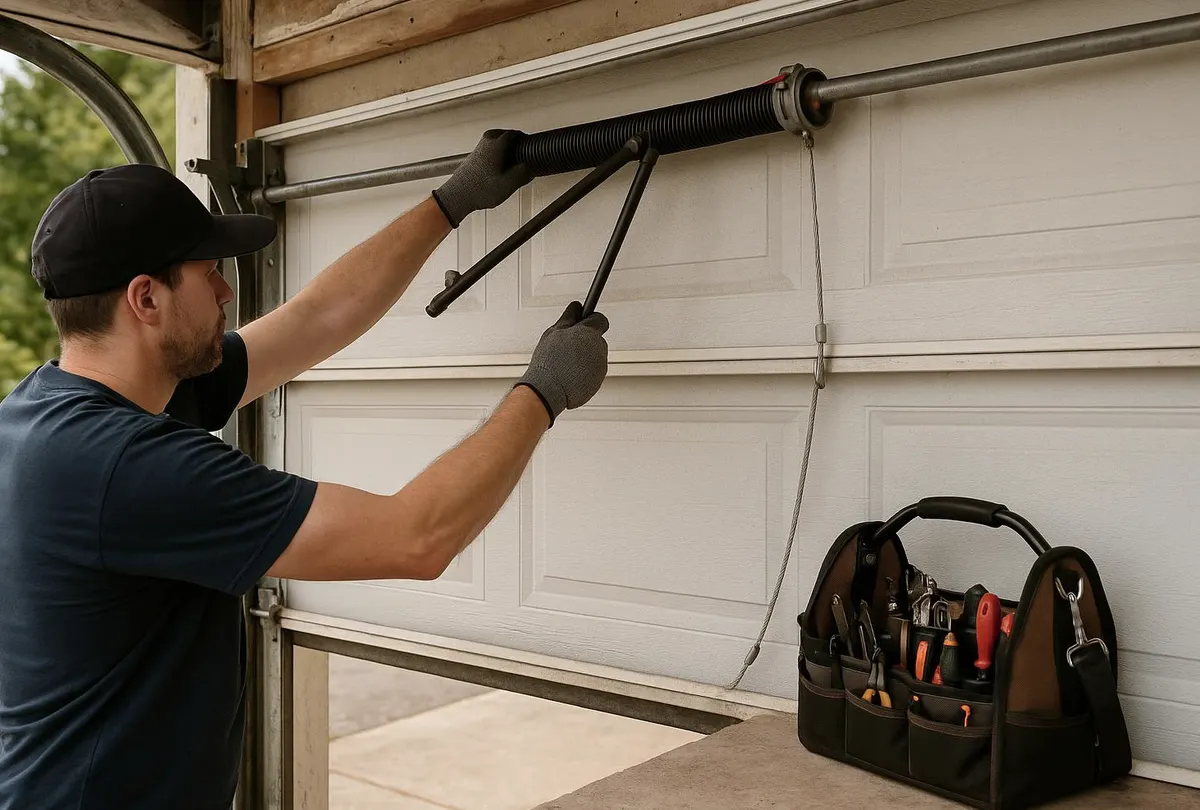
What a Technician Sees After a Break-In Attempt
When a Bronson Garage Door technician gets called out after an attempted break-in, the damage is rarely dramatic. It's usually a bent bottom panel where someone pried the door up a few inches, a torn weatherstrip, or a bracket pulled loose from the track. Homeowners are often surprised the door didn't look "broken into" in the way they expected. That's because most garage door burglaries aren't smash-and-grab jobs. They're quiet, fast, and depend on a handful of weaknesses that show up again and again in older openers, worn hardware, and habits that made sense years ago but don't anymore.
How Burglars Actually Get Through a Garage Door
The methods aren't complicated, which is exactly why they work.
- The coat hanger trick. On doors without a protective shield, someone can slide a wire through the gap at the top of the door, hook the emergency release cord, and pull it to disengage the opener. From there the door lifts by hand in seconds.
- Prying the bottom corner. A crowbar or flat tool wedged under a corner can pop a door off a weak track or bend the bottom panel enough to crawl under, especially on older steel doors that have softened from years of temperature swings.
- Code grabbing on old remotes. Openers from the 1990s and earlier often use fixed codes that can be captured and replayed with cheap electronics. Rolling-code systems (standard on anything made in the last couple decades) close this gap, but a lot of rural garages still have the original opener.
- Broken or missing window panes. Decorative windows in the top panels look nice, but a few are large enough to reach through and hit the emergency release or a wall-mounted button.
- The side door shortcut. Many break-ins skip the garage door completely and go through a flimsy side service door instead, then open the overhead door from inside at their leisure.
None of this requires much skill. It requires an unlocked habit or a piece of hardware that was never updated.
Simple Habits That Close the Gaps
Most of the fix is behavioral, and it costs nothing.
- Don't leave the remote in the car. A garage door remote clipped to a visor is an invitation if the car itself is ever broken into or borrowed.
- Cover or frost garage windows. If your door has glass panels, a privacy film keeps someone from seeing what's parked inside — tools, bikes, a second vehicle — and stops them from reaching the release mechanism.
- Lock the side door like a front door. A deadbolt, not just a doorknob lock, matters here. Garages get treated as storage space, but the door into the house from the garage should be treated like an exterior entry point.
- Don't leave the door cracked for ventilation. It's tempting on a mild fall evening, but a door up six inches is as good as open to someone who knows what they're looking at.
- Be careful with smart garage apps on shared family accounts. If a family member installs an app on a phone that later gets lost or sold, revoke access rather than assuming it doesn't matter.
Hardware Upgrades Worth the Cost
A few physical changes do more than any habit change alone:
- A rolling-code opener. If your opener predates rolling codes, this single upgrade removes the code-grabbing risk entirely.
- An emergency release shield. A simple plastic or metal guard around the release cord defeats the coat-hanger method completely and costs very little to add.
- A slide bolt or keyed lock on the track. For manual doors or older systems, a physical lock that engages the track prevents the door from being forced up even if the opener is bypassed.
- Reinforced struts on wide doors. Double and triple-car doors flex more in the middle, which is exactly where prying is most effective. A horizontal strut kit stiffens the panel.
- Smart openers with activity alerts. Modern openers can send a phone notification every time the door opens, which matters most when the house sits empty during a work shift or a winter trip south.
Why Winter in Branch County Makes This Worse
Cold weather adds its own risk. Road salt and ice buildup can make tracks and locks stiff, and a lot of homeowners respond by leaving the side door unlocked or disabling a sticky slide bolt rather than fixing it. Power outages during winter storms also mean openers go dead, and people sometimes leave the manual release engaged afterward and forget to reset it — which leaves the door unsecured from the inside without anyone realizing it.
When to Call Bronson Garage Door
If your opener still uses an old fixed-code remote, if the emergency release has no shield, or if the door sticks, drags, or doesn't seal evenly along the bottom, it's worth having it looked at before winter sets in. Bronson Garage Door handles garage door opener service to upgrade aging systems to rolling-code, motion-alert models, and garage door maintenance visits that catch bent tracks, worn rollers, and loose hardware before they become an easy point of entry. We serve homeowners throughout Bronson, Coldwater, Union City, Quincy, Sherwood, Tekonsha, Batavia, and Girard.
If you're in Bronson, MI and want your garage door checked before the snow flies, call Bronson Garage Door today to schedule a visit.