
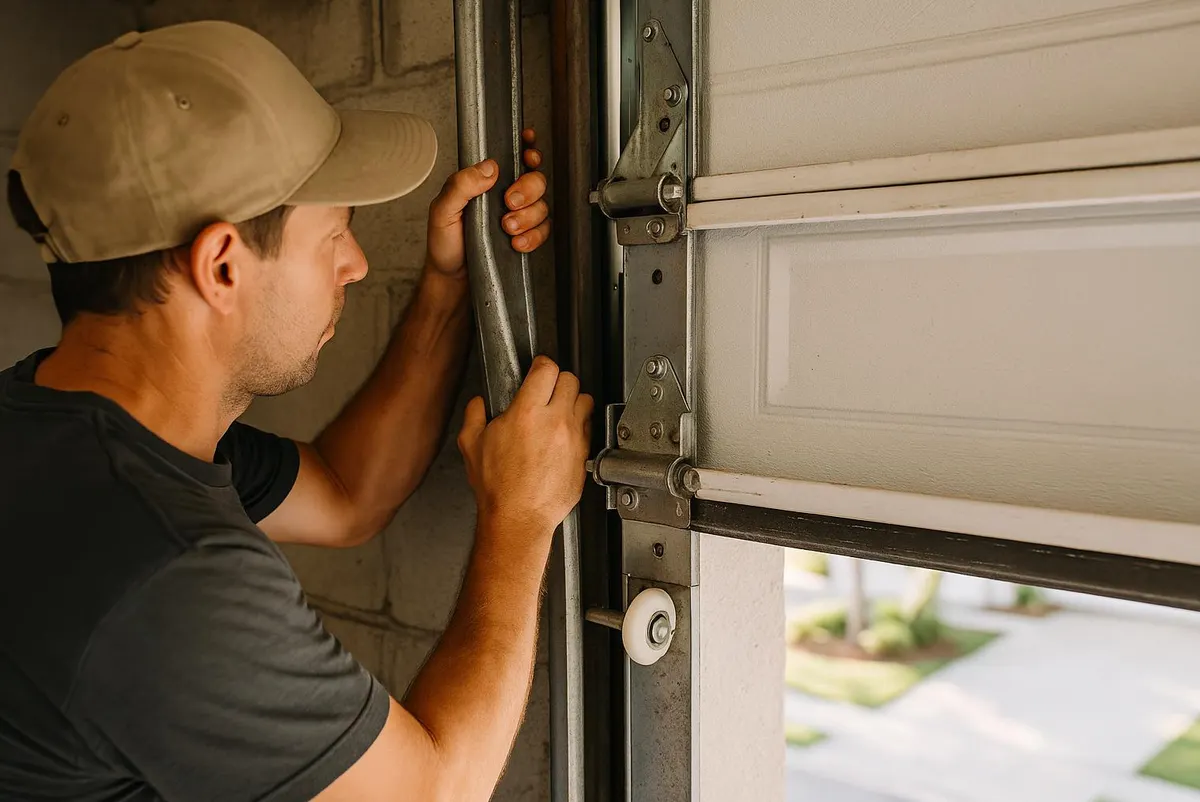
You pull into the garage after the first truly cold night of the season, hit the opener, and the door groans instead of gliding. Maybe it hesitates halfway up. Maybe the opener strains and the chain slaps against the rail. That sound is the first sign that your garage door has gone from "summer mode" into a Michigan winter it isn't ready for. Once the deep cold, snow, ice, and road salt settle in for the season, small problems get worse fast. Here's what to check now, while you can still do it with bare hands and without ice on the ground.
Cold Steel Behaves Differently Than Warm Steel
Garage door springs, tracks, and hinges are all metal, and metal contracts as the temperature drops. That slight contraction changes how much tension a spring is actually holding and how smoothly rollers move in the track. A door that opened quietly in October can start to sound rough, jerky, or heavy in a hard freeze simply because the hardware is working under different conditions than it was built and adjusted for in warmer weather.
Check the Weatherstripping Before the Snow Flies
The rubber seal along the bottom of the door and the strips along the sides are your first defense against wind-driven snow, slush, and salty road spray getting into the garage. Rubber stiffens and cracks in deep cold, and a seal that looked fine in September can split or pull away from the track once temperatures stay below freezing for days at a time. Walk around the door and look for:
- Gaps where daylight shows through along the bottom edge
- Cracked or brittle rubber that's lost its flexibility
- Side seals pulling loose from the track
Replacing worn weatherstripping now is inexpensive compared to dealing with a flooded or salt-stained garage floor all winter.
Lubricate Before the Lubricant You Have Turns to Sludge
Standard lubricants thicken in cold weather, which means a product that worked fine in summer can gum up rollers, hinges, and the spring itself once the mercury drops. Use a silicone-based or lithium-based garage door lubricant rather than a general household oil, and apply it to the rollers, hinges, and springs before the first hard freeze locks everything into place. Avoid spraying lubricant directly on the track itself—it's the rollers that need it, not the rail.
Pay Attention to Spring Strain
Springs do the heavy lifting on a garage door, and cold steel is more brittle than warm steel. A spring that's already worn from years of cycling can fail at the worst possible moment—often with a loud bang—once winter adds extra strain. Watch for a door that feels heavier than usual when operated manually, visible gaps or stretching in the spring coils, or a door that closes unevenly. These are signs a spring is nearing the end of its life, and waiting until it snaps in January, with a storm coming, is the hard way to find out.
Don't Ignore the Opener and Sensors
Battery backups lose capacity faster in cold garages, and safety sensors mounted low near the floor are easy targets for snow kicked up by boots, shovels, or a car brushing past. If the sensors get bumped out of alignment, the door may refuse to close at all or reverse unexpectedly—often right when you're trying to get out the door in a hurry during a storm. Test the opener's manual release, check the sensor alignment, and confirm the backup battery still holds a charge before you're relying on it during an outage.
Think About the Garage Itself
If the garage is attached to the house, an insulated door and tight seals do more than keep the space comfortable—they reduce the temperature swings that can affect pipes running along that wall and cut down on the condensation that forms when snow melts off a parked car. If your door isn't insulated and the garage stays well below freezing all winter, that's worth factoring into any planned repairs or upgrades.
When to Call Bronson Garage Door
If you're hearing new noises, noticing uneven movement, or you just want a second set of eyes before winter settles in, that's exactly what a seasonal tune-up is for. Bronson Garage Door's garage door maintenance service covers lubrication, hardware checks, and spring tension, and if a spring is showing real wear, our spring replacement service gets it handled before the cold makes it worse. We work on doors throughout Bronson, Coldwater, Union City, Quincy, Sherwood, Tekonsha, Batavia, and Girard, and we'd rather fix a small issue in November than get an emergency call in a January snowstorm.
Call Bronson Garage Door today to schedule a winter check for your garage door in Bronson, MI.